
Sketching trees can be intimidating, especially for those new to drawing. The intricate branches, delicate leaves, and varying textures all seem like daunting challenges to capture on paper. However, with practice and guidance, anyone can learn the art of sketching trees effectively. In this comprehensive guide, we’ll start from the basics, covering essential techniques such as line work, value, and texture. We’ll then move on to more advanced methods for creating realistic tree sketches. You’ll learn how to observe and render different types of foliage, including deciduous and evergreen trees, as well as how to capture their unique shapes and forms. By the end of this article, you’ll be able to create beautiful and accurate sketches of trees that showcase your artistic skills and attention to detail.
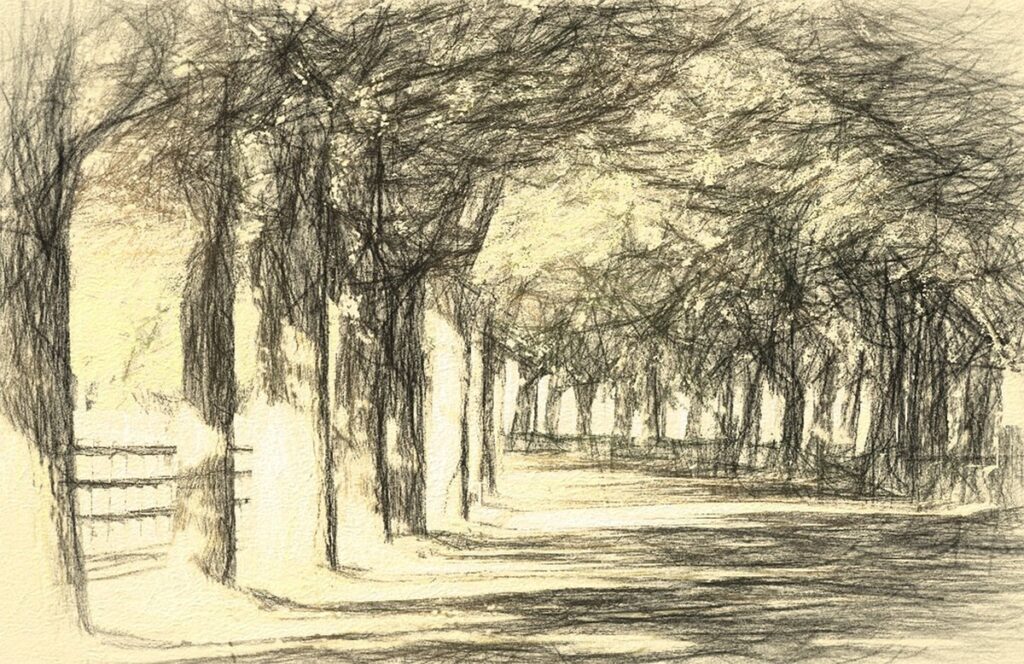
Understanding the Basics of Tree Sketching
Tree sketching can seem intimidating, but understanding the fundamentals is key to creating beautiful and realistic tree drawings. Let’s start by learning the basic shapes and forms that make up a tree.
Getting Started with Basic Shapes and Lines
When starting to sketch trees, it’s essential to understand the fundamental shapes and lines used in tree drawing. Begin by familiarizing yourself with basic forms such as circles, ellipses, and geometric shapes like triangles, squares, and rectangles. These shapes will serve as the building blocks for your tree sketches.
Use a range of line weights to add depth and dimension to your drawings. Varying line thickness can help create texture and visual interest. For example, use thicker lines for branches and trunks, and thinner lines for leaves and twigs. Practice drawing smooth lines by focusing on gentle curves and subtle transitions between shapes.
Pay attention to the placement of these basic forms within your composition. Consider the negative space around your tree sketch – where empty space can help create a sense of balance and harmony. In terms of specific techniques, try using simple shapes to block out major areas of your tree, such as the canopy or trunk. Then, use more detailed lines to add texture and definition.
Familiarizing Yourself with Common Tree Forms
When sketching trees, it’s essential to familiarize yourself with their common forms. Start by categorizing trees into three main groups: deciduous, evergreen, and palm trees. Deciduous trees, like oaks and maples, lose their leaves seasonally, often displaying vibrant fall colors before going dormant. Their broad canopies and sturdy branches make them a popular choice for sketching.
Evergreen trees, such as pines and spruces, retain their needle-like foliage year-round, providing a lush, green presence in winter landscapes. Their conical shapes and drooping branches create interesting visual contrasts. Palm trees, with their tall trunks and feathery fronds, add a tropical touch to sketches.
Each type of tree has distinctive characteristics that can be captured through observation and practice. For example, deciduous trees often have a more sprawling canopy, while evergreen trees tend to have a narrower profile. Palm trees, on the other hand, typically feature a single trunk with multiple fronds emerging from its top. By studying these common forms, you’ll develop your skills in accurately depicting the variety of tree species found in nature and in different environments.
Mastering Leaf and Branch Techniques
Mastering leaf and branch techniques requires a combination of observation, practice, and patience. You’ll learn how to accurately render leaves, branches, and twigs that add depth and texture to your tree sketches.
Sketching Leaves: Shapes, Texture, and Placement
When sketching leaves, it’s essential to consider their shapes, textures, and placement on branches. Leaves come in various forms, from the pointed tip of a fir needle to the broad, flat shape of an oak leaf. Start by observing the overall shape of the leaf: is it oval, teardrop-shaped, or heart-leafed? Note the number of lobes or serrations along its edges.
Texture is another crucial aspect of realistic leaf sketching. Some leaves have a smooth, glossy appearance, while others are waxy or hairy to touch. To capture this texture, use a range of line weights and hatching patterns. For example, you can use short, curved lines for the delicate hairs on a birch leaf or longer, more expressive strokes for the rough bark of an oak.
When placing leaves on branches, remember that they don’t always grow in neat rows or symmetrical clusters. Instead, observe how they naturally cluster and overlap each other, often with varying sizes and shapes. To achieve this effect, try sketching a few key leaves first and then adding smaller, more delicate ones around them. This will help create a sense of depth and visual interest in your tree drawing.
Capturing Branch Structure and Movement
When capturing branch structure and movement in a tree sketch, it’s essential to convey weight, direction, and energy through lines and shapes. Start by observing the way branches grow from the trunk, often at an angle or with a slight twist. This natural curvature can be replicated using gentle S-curve lines that follow the branch’s trajectory.
To depict the movement of branches, experiment with varying line weights and textures. Thicker lines can indicate sturdy limbs, while thinner ones suggest more delicate growth. Consider adding some subtle texture to your lines by applying gentle pressure or switching between pens with different tip sizes.
Pay attention to how branches intersect or curve around each other – this is where the energy of the tree becomes most apparent. Use a range of line weights and directions to capture the dynamic tension between these points, creating a sense of flow that draws the viewer’s eye through the sketch.
When rendering smaller twigs and leaves, focus on suggesting their movement rather than drawing every detail. A loose, expressive line can evoke the gentle sway of branches in the breeze, while a few strategically placed lines can imply the weight and structure of larger limbs.
Advanced Techniques for Realism and Depth
To take your tree sketches to the next level, we’ll explore advanced techniques that will add depth, texture, and realism to your artwork. This includes methods like layering and blending subtle shading.
Achieving Realistic Bark Texture and Patterns
Realistic bark texture and patterns are essential elements for bringing trees to life on paper. Each tree species has unique characteristics that can be observed in its bark, from the rugged ridges of an ancient oak to the smooth exfoliating layers of a young willow. To capture these details, study photographs or observe trees in person, paying attention to the patterns and textures of different species.
Start by sketching the overall shape and placement of the bark on your tree’s trunk and branches. Use gentle curves and soft lines for smoother bark, and more angular strokes for rougher textures. For added depth, consider the direction and pattern of lenticels – small openings in the bark that allow for gas exchange. To convey the sense of age and wear, suggest the underlying wood grain with soft hatching or cross-hatching.
When capturing intricate patterns, use a range of line weights to indicate varying levels of detail. For example, fine lines can suggest delicate moss or lichen growth on a tree’s bark, while thicker strokes can represent gnarled ridges or deep furrows. By focusing on these subtle textures and patterns, you’ll be able to create convincing bark details that add realism and depth to your sketches.
Adding Atmosphere and Mood with Lighting and Shading
When it comes to creating realistic and immersive tree sketches, conveying atmosphere and mood through lighting and shading is crucial. To achieve this, you need to understand how light interacts with different textures and surfaces.
Start by observing the way light falls on various parts of the tree, from the dappled shadows beneath the canopy to the sun-kissed ridges of the bark. Notice how different types of lighting – warm or cool, direct or indirect – can create distinct moods and atmospheres. For example, a soft, diffused light might evoke a sense of serenity, while a strong, directional light could suggest energy and dynamism.
To capture this effect in your sketch, experiment with various shading techniques. Try using gentle hatching to suggest the softness of foliage or the roughness of bark, or use deeper, more defined lines to convey the texture of tree trunks and branches. Consider the direction and intensity of light when placing shadows, as well as their relationship to the surrounding environment.
When working with shading, keep in mind that it’s not just about creating dark areas – it’s also about suggesting volume and depth. Use gentle gradations of tone to create a sense of layering and dimensionality, rather than relying on harsh contrasts or overemphasis on shadow.
Sketching Trees in Different Environments
Let’s explore how trees adapt and change in various environments, from lush forests to dry deserts. We’ll break down the key elements to capture these unique settings on paper.
Capturing Trees in Urban and Natural Settings
Capturing trees in urban and natural settings presents unique challenges and opportunities for sketch artists. In urban landscapes, you’ll often find trees surrounded by buildings, pavement, and other structures that can make it difficult to get a clear view of the tree’s overall form. However, this environment also offers a chance to capture interesting interactions between trees and their man-made surroundings.
In contrast, natural settings like forests or mountains offer a more straightforward approach to sketching trees. You’ll often have unobstructed views of the tree’s entire form, allowing you to focus on capturing its shape, texture, and placement within the environment. However, be mindful of the scale and atmosphere of these environments – for example, a small sapling in a dense forest may be easy to overlook.
To capture trees effectively in both urban and natural settings, pay attention to the interplay between the tree and its surroundings. In urban areas, consider how the tree’s branches interact with surrounding structures or other trees. In natural areas, focus on capturing the relationships between the tree and its environment – for example, how its canopy affects the light filtering through the forest.
When sketching in both environments, it can be helpful to create a rough outline of the surroundings before focusing on the tree itself. This will help you establish proportions and get a sense of the tree’s place within the larger scene.
Documenting Tree History and Evolution through Sketches
Tree sketches can serve as a valuable tool for documenting historical events, environmental changes, and scientific discoveries related to tree species. By capturing the characteristics of trees over time, artists can contribute to our understanding of tree biology and ecology.
A sketchbook record of a single tree can reveal significant information about its growth patterns, adaptation to changing conditions, or response to disease or pests. For instance, an artist might observe how a tree’s bark changes color or texture as it ages, providing insight into the process of senescence in tree species.
To effectively document tree history and evolution through sketches, focus on observing and recording specific details such as:
• The shape and size of leaves at different stages of growth
• Changes in branch structure over time
• Patterns of bark growth or shedding
• Adaptations to environmental factors like climate, soil quality, or disease
Regularly sketching the same tree can help you recognize subtle patterns that would otherwise go unnoticed. By combining these observations with research on the specific tree species, artists can create a comprehensive record of its life cycle and contribute to the broader understanding of tree biology.
Tips and Exercises for Improving Your Skills
Now that you’ve learned the basics of sketching trees, it’s time to put your skills into practice. This next part is all about exercises and tips to help you improve your tree-drawing abilities.
Common Mistakes to Avoid When Sketching Trees
When sketching trees, it’s easy to get caught up in the details and lose sight of the overall composition. One common mistake is ignoring the proportions of the tree, making it either too large or too small in relation to its surroundings. To avoid this, take a moment to study the tree’s placement within your sketch space before starting to draw.
Another pitfall is neglecting perspective, which can make your tree look flat and unconvincing. Remember that trees have depth – their trunks thicken towards the base, branches grow thicker as they ascend, and leaves taper off at the top. Use gentle, curved lines to suggest this depth rather than sharp, vertical ones.
In terms of composition, don’t be afraid to leave some areas of the page blank. A busy background can overwhelm your tree and make it harder to focus on its details. Instead, balance your composition by leaving space around the tree for surrounding foliage, sky, or other elements that enhance its presence.
To improve your tree’s perspective and proportions, practice sketching trees in different environments – from dense forests to open fields. This will help you develop a sense of scale and proportion, making it easier to accurately depict trees in various settings.
Practice Exercises for Mastering Tree Sketching Techniques
To master tree sketching techniques, it’s essential to practice regularly. Here are some exercises designed to improve specific skills:
Exercise 1: Varying Branch Angles
Sketch a single branch with different angles and curves. Practice drawing branches that converge and diverge from the trunk. For example, try a branch that arches over a limb or one that grows straight down from the top.
Exercise 2: Leaf Placement and Texture
Draw a group of leaves on a branch, focusing on their placement, shape, and texture. Vary the size, angle, and spacing of the leaves to create visual interest. Practice drawing different types of leaves, such as needles or broad-leaved trees like oak or maple.
Exercise 3: Capturing Tree Movement
Sketch a tree in motion, with branches swaying in the wind. Focus on conveying movement through lines and gesture drawings. Use short, expressive strokes to capture the dynamic energy of the tree.
Exercise 4: Shading and Atmospheric Perspective
Draw a simple tree form with shading that creates depth and atmosphere. Practice using different values (light and dark) to suggest distance and scale.
Frequently Asked Questions
What if I’m struggling to capture realistic branch structure and movement in my sketches?
Yes, it’s normal for beginners to struggle with depicting complex branch structures and movements. To improve, focus on studying the branching patterns of different tree species and practice sketching branches with varying directions, weights, and energies. Pay attention to how branches flow from trunk to tip, and experiment with different line weights and textures to convey movement.
Can I use digital tools to create realistic bark texture and patterns in my sketches?
Yes, you can use digital tools like pencils, brushes, or software to achieve realistic bark texture and patterns. However, keep in mind that digital tools should enhance your traditional skills, not replace them. Practice sketching bark textures with a range of techniques, including hatching, cross-hatching, and stippling, before relying on digital tools.
What’s the best way to capture trees in different environments, like urban or natural settings?
When capturing trees in various environments, observe how light interacts with the tree’s shape, texture, and surroundings. Use reference images to study how artists tackle unique challenges in each setting. Practice sketching trees in different contexts, noting how environmental factors influence your approach.
How can I document the history and evolution of a specific tree species through sketches?
Documenting tree history and evolution requires thorough research on the species’ ecology, biology, and historical context. Study existing records, photographs, and artworks to inform your sketches. Practice sketching different stages of growth, seasonal changes, or environmental responses to create a narrative of the tree’s life cycle.
Can I apply the techniques learned in this guide to other types of plants, like flowers or shrubs?
Yes, many techniques for sketching trees can be applied to other plants, but keep in mind that each type requires unique adaptations. Study the anatomy and growth patterns of individual plant species, adjusting your approach to suit their characteristics. Practice sketching different parts of the plant, such as leaves, stems, and roots, to develop a versatile skill set.