
Learning to sketch can seem intimidating, especially if you’re new to drawing. But with practice and patience, anyone can develop their skills and create realistic drawings that showcase their understanding of proportions, anatomy, and perspective. As a beginner, it’s essential to start with the basics: mastering the fundamentals of sketching will give you a solid foundation for creating lifelike artwork. In this guide, we’ll cover everything from choosing the right tools to understanding the principles of drawing and shading. We’ll explore how to break down complex subjects into simpler components, allowing you to focus on the details that bring your sketches to life. By the end of this comprehensive guide, you’ll have a clear understanding of what it takes to create realistic drawings and be able to apply these skills in your own sketching practice.
Setting Up Your Drawing Space
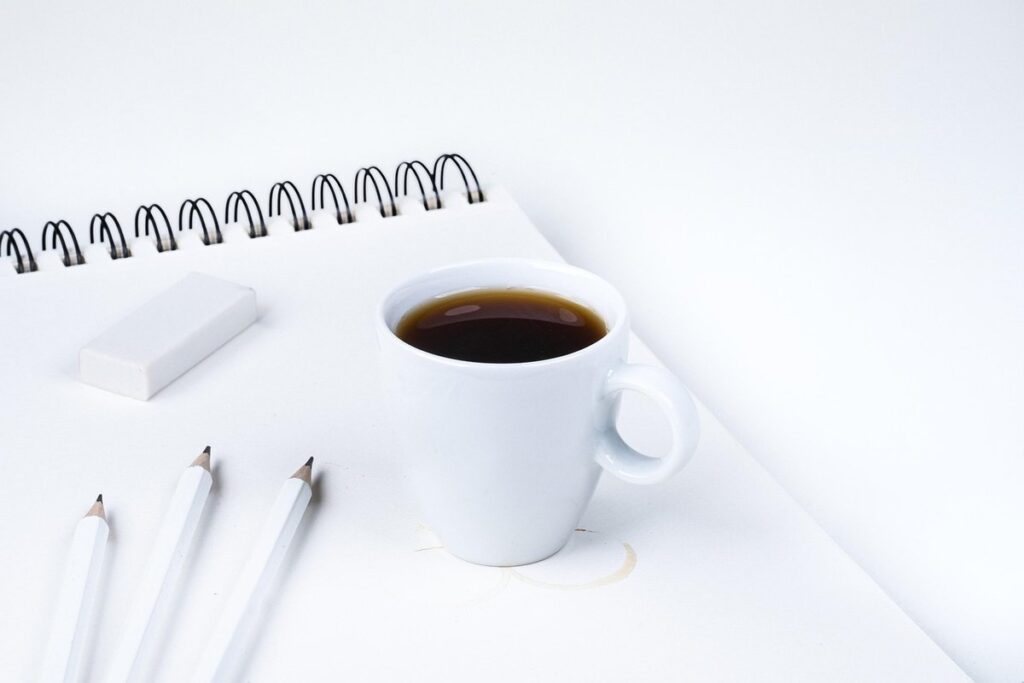
To create a comfortable and productive drawing space, let’s start by setting up your dedicated area for sketching with essential tools and supplies within easy reach. This will help you stay focused on learning to draw.
Choosing the Right Tools
When choosing the right tools for sketching, it’s essential to start with the basics. You’ll need a variety of pencils, including graphite and colored pencils, as well as an eraser for correcting mistakes. A good quality pencil sharpener is also important for keeping your pencils sharp.
The type of paper you use can greatly affect the outcome of your sketches. Look for paper that’s specifically designed for drawing, with a smooth texture that allows for even lines and shading. Avoid using printer paper or notebook paper, as they tend to be too thin and may bleed through when colored.
In addition to pencils and paper, consider investing in a few basic accessories, such as a pencil case, sharpener, and eraser holder. These can help keep your workspace organized and within reach.
To set up a comfortable drawing space, make sure you have good lighting and a stable surface to work on. A desk or table with adequate legroom will allow you to sit comfortably for extended periods. Consider investing in an ergonomic chair and a document holder to keep your reference materials at eye level.
Understanding Basic Materials
When it comes to sketching, the materials you choose can greatly impact the quality of your work. Let’s start with paper – a staple for most sketches. Look for paper labeled as “hot press,” “cold press,” or “rough.” Hot press paper is smooth and ideal for detailed drawings, while cold press paper has a subtle texture and works well for general sketching. Rough paper, on the other hand, features a noticeable texture and is best suited for loose gesture drawings.
Pencil leads come in various hardness levels (HB, 2B, 4B, etc.), with softer pencils producing darker lines. A graphite pencil (#2) is a versatile choice for most sketches, as it’s neither too hard nor too soft. Erasers also vary – gum erasers are good for removing pencil marks without leaving residue, while kneaded erasers can be shaped to fit small areas and removed easily.
When selecting materials, consider the specific type of sketch you’re creating. For example, if you’re working on a detailed portrait, choose a smooth paper like hot press. If you’re doing a loose gestural drawing, rough paper might be more suitable. Understanding these basic characteristics will help you make informed decisions about your materials and improve your overall sketching experience.
Mastering the Fundamentals of Drawing
Let’s start by building a solid foundation, covering the basic principles of line, shape, value, and texture that form the backbone of any good drawing. Understanding these fundamentals will help you create more confident and expressive sketches.
Basic Line Work
Drawing lines is a fundamental aspect of sketching, and it’s essential to understand the different types of lines before moving on to more complex subjects. There are four main types of lines: straight, curved, diagonal, and hatching.
Straight lines are created by drawing a single line that doesn’t change direction or angle. Curved lines, on the other hand, follow a smooth, continuous arc. Diagonal lines slant from one corner of the paper to the opposite corner, adding a sense of energy and movement to your sketch. Hatching lines involve creating parallel lines close together to suggest shading and texture.
To practice line work skills, try the following exercises: draw a series of straight lines with varying lengths and angles; create a simple shape using curved lines; and experiment with hatching by drawing parallel lines on different areas of a sheet of paper. You can also try drawing different types of lines in isolation before combining them to create more complex subjects.
Pay attention to the weight and texture of your lines, as this can greatly impact the overall mood and atmosphere of your sketch. Experiment with varying line weights and textures to find what works best for you.
Understanding Shapes and Forms
When breaking down complex forms into simple shapes, it’s essential to understand how basic geometric shapes contribute to their overall structure. Start by recognizing common shapes like spheres, cylinders, and rectangles, as these are frequently used building blocks of everyday objects.
A sphere is a three-dimensional shape with all points equidistant from its center. This means that every part of the sphere curves outward in the same way, creating a smooth, rounded appearance. Observe how a basketball or an egg are perfect examples of spheres. Cylinders, on the other hand, have two parallel bases connected by a curved surface. Think of a tin can or a soda bottle as illustrations of cylinders.
Rectangles are flat shapes with four sides and four right angles. They’re commonly used in construction, furniture design, and even human anatomy (think ribcage or pelvis). To develop your observational skills, practice identifying these basic shapes within everyday objects. Try drawing simple still-life compositions using only spheres, cylinders, and rectangles. As you become more comfortable with breaking down complex forms into simple shapes, you’ll find it easier to accurately depict the world around you in your sketches.
Getting Familiar with Proportion and Measurement
Understanding proportion and measurement is crucial for creating realistic sketches, so let’s start by breaking down what these two concepts mean for your drawing skills.
Measuring Your Subject
When measuring proportions in your subject, it’s essential to use techniques that ensure accuracy and precision. One effective method is grid drawing. Start by creating a square grid on paper with evenly spaced lines. Then, superimpose the same grid pattern onto your subject by dividing it into identical squares. This will help you break down complex forms into manageable sections.
Another useful tool is the proportion grid, which allows you to measure proportions directly from the subject. Create a grid with horizontal and vertical lines that intersect at points corresponding to key features of your subject’s face or body. Measure the relationships between these points to calculate proportions accurately.
To apply this technique effectively, focus on specific areas such as the face, hands, or feet. Break down each feature into its constituent parts, measuring the proportions between them. For example, when drawing a portrait, use the proportion grid to ensure accurate placement of facial features relative to the overall head size. Practice using these techniques with still-life compositions and simple subjects before moving on to more complex forms.
Practicing Proportional Sketching
To ensure accurate representation of your subject, practice applying proportional measurements in sketches. Start by dividing a piece of paper into sections using a ruler and pencil to create a grid. Measure and draw lines at specific intervals, such as 1/3, 2/3, or 1/4 of the way across your paper. Use these guidelines to sketch simple subjects like fruit or household objects.
For more challenging proportions, try dividing your subject into smaller sections. For example, when drawing a face, measure and draw lines at the top of the head, the base of the neck, and where the shoulders meet the torso. This will help you capture the proportions between different facial features.
Another exercise is to sketch an object from multiple angles, using measurements to ensure accuracy. Measure the length, width, and height of your subject, then divide it into sections based on these dimensions. Practice drawing these measured lines in various positions to develop a sense of proportion and measurement.
Basic Anatomy for Sketchers
To get started, let’s break down the basic forms and structures that make up the human body, focusing on essential features to capture accurately. We’ll cover the foundational elements of anatomy in simple terms.
Understanding Human Body Structure
The human body is a complex structure, but understanding its basic components can greatly improve your sketching skills. Start by familiarizing yourself with the skeletal system. The skeleton provides the underlying framework for the entire body, and it’s essential to grasp the proportions of different bone structures. For example, the length of the skull in relation to the torso is crucial when drawing a person from life.
When considering the muscles, focus on the major muscle groups that make up the body’s surface. The front and back of the body have distinct muscle patterns that help create shape and volume. For instance, the bicep and triceps are prominent on the arm, while the latissimus dorsi covers much of the upper back.
In terms of proportions, keep in mind that the average adult human is roughly 7-8 heads tall. This measurement applies to both men and women. Understanding this ratio will help you draw people more accurately, as it provides a basic guideline for proportioning facial features and body parts. To practice these concepts, try sketching simple skeletons or muscular studies from reference images.
Drawing Facial Features
When drawing facial features, it’s essential to capture the subtleties of expression and individuality. Start by dividing the face into thirds both horizontally and vertically, creating a grid-like structure. This will help you place key features accurately.
The eyes are often considered the most important feature on the face, conveying emotions and personality. To draw realistic eyes, pay attention to their shape, size, and spacing. The upper lid should be slightly curved, with a slight tilt upwards towards the outer corner. The lower lid is generally more angular, with a subtle curvature.
The nose, mouth, and jawline should also be proportionate and balanced in relation to each other. A general rule of thumb is to place the nose about one-third down from the top of the face. The mouth can be drawn as a gentle curve, with the lips subtly rounded at the edges.
To capture an overall expression, consider the relationship between the facial features rather than just drawing individual parts. For example, if you’re aiming for a happy expression, think about how the eyebrows, eyes, and mouth interact to convey that emotion. By focusing on these relationships, you can create more nuanced and engaging sketches of faces.
Creating Depth and Perspective in Your Sketches
Creating depth and perspective is what takes your simple sketches from flat to fascinating. We’ll explore the techniques that will help you add dimension to your drawings.
Understanding One-Point and Two-Point Perspective
When creating drawings, perspective is key to making them look realistic. One-point and two-point perspectives are fundamental techniques for drawing 3D scenes on a flat surface. The one-point perspective involves drawing parallel lines converging at a single vanishing point. This technique is often used in urban landscapes, such as straight roads or alleys. For example, when drawing a city street, you can use the horizon line and one vanishing point to create the illusion of depth.
Two-point perspective requires two vanishing points on either side of your subject. This method allows for more complex scenes with multiple lines converging at different angles. Think of it as adding another dimension to your drawing. Imagine a corner room in a building – you can use two vanishing points to draw the walls and floor, creating a convincing 3D space.
Atmospheric perspective is also crucial in creating realistic drawings. It’s essential to understand that objects appear lighter or darker based on their distance from the viewer. Typically, distant objects are softer and less detailed than those closer up. By incorporating atmospheric perspective into your drawing, you can create a sense of depth and distance between objects.
Practicing Atmospheric Perspective
Atmospheric perspective is a technique used to create depth and distance in drawings by hinting at the atmosphere’s effect on light. To practice atmospheric perspective, you’ll want to experiment with different techniques for simulating haze and fog. Start by observing how light behaves in hazy or foggy conditions – notice how distant objects appear soft and muted.
Try using a range of values to suggest depth. For example, use gentle, gradient-like transitions from light to dark to indicate distance. You can also use loose brushstrokes or short hatching lines to convey the sense of atmosphere. Practice this technique with simple subjects like buildings or landscapes.
When applying haze, focus on softening edges and blending colors subtly. Avoid using hard lines or sharp contrasts, as they’ll disrupt the illusion of depth. Experiment with different tools or techniques for creating textured effects – like wet-on-wet watercolor or drybrushing in pencil. Consider practicing atmospheric perspective with simple still-life compositions to get a feel for how it can enhance your drawings.
Remember that atmospheric perspective is all about subtlety and suggestion, not precise detail. It’s essential to strike a balance between hinting at depth and maintaining clarity in your drawing.
Sketching from Observation and Reference Images
As you continue on your sketching journey, it’s essential to learn how to effectively use observation and reference images to capture accurate proportions and details in your drawings. We’ll break down the key concepts and techniques for incorporating these skills into your practice.
Observational Drawing Exercises
To develop observational drawing skills, it’s essential to practice drawing directly from life or still-life compositions. Here are some exercises that will help you get started:
Exercise 1: Contour Drawing
Spend a few minutes observing an object, then draw its outline without looking at your paper. Repeat this process several times, focusing on different aspects of the object each time.
Exercise 2: Gesture Drawing
Set a timer for one minute and quickly sketch the overall pose or gesture of a still-life setup. Focus on capturing movement and energy rather than precise details.
Exercise 3: Still-Life Composition
Create a simple still-life arrangement using household objects. Practice drawing the relationships between these objects, including their sizes, shapes, and placement in space.
When practicing these exercises, remember to observe your subject carefully before starting to draw. Look at the shape of an object, its proportions, textures, and details. Try to capture its essence rather than just its appearance. As you become more comfortable with these exercises, gradually increase the time spent on each drawing and focus on refining your techniques.
Using Reference Images Effectively
When using reference images, it’s essential to strike a balance between studying and reproducing. Choose references that closely match your subject’s likeness, taking into account factors like pose, lighting, and environment. For instance, if you’re sketching a landscape, use photographs of similar landscapes or scenes with comparable lighting conditions.
Avoid over-reliance on reference images by setting limits for yourself. Practice drawing from memory by covering the image while you work or limiting your study time to specific details. This will help you develop observational skills and create more original pieces. Consider using reference images as a starting point, then gradually adding your own interpretations and embellishments.
When selecting references, prioritize accuracy over aesthetics. Avoid images with distracting backgrounds, harsh lighting, or poor composition. Opt for photographs that showcase the subject in a clear, unobtrusive way. For beginners, it’s also helpful to use reference images from various sources, such as paintings, sketches, or sculptures, to gain exposure to different artistic styles and techniques.
Putting it All Together: Tips for Improvement and Practice
Now that you’ve mastered the basics of sketching, let’s focus on putting your newfound skills into practice with some valuable tips and techniques to help you improve.
Setting Realistic Goals and Expectations
Setting realistic goals and maintaining a consistent practice schedule are crucial for beginners to stay motivated and track their progress. Many people start with ambitious plans to sketch every day, but soon realize that it’s unsustainable. Instead, aim to commit to a set number of days each week – even two or three times per week can be better than nothing.
When setting goals, consider what you want to achieve in the short-term (next few weeks) and long-term (next few months). Break down larger objectives into smaller, manageable tasks. For example, if your goal is to improve your portrait drawing skills, start by practicing simple facial features, such as eyes or noses, before moving on to more complex subjects.
Aim to dedicate a specific time slot each day or week for sketching. This could be 15 minutes in the morning, 30 minutes during lunch breaks, or an hour in the evening. Consistency is key, not necessarily frequency. Focus on quality over quantity – it’s better to spend a shorter amount of time each day practicing than trying to cram all your practice into one long session once a week.
Remember that progress may be slow at first, and that’s okay. Celebrate small victories along the way, like mastering a new technique or completing a challenging piece.
Encouraging Creativity and Experimentation
Experimenting with different techniques, styles, and mediums is essential to keep your sketches fresh and engaging. Start by trying out new tools, such as pencils with varying hardness levels or brushes with unique textures. You can also experiment with digital drawing software, which often comes with a range of customizable brushes and effects.
Another way to mix things up is to try different sketching styles, like gestural drawing or contour drawing. Gestural drawing involves quickly capturing the overall pose and movement of your subject, while contour drawing focuses on outlining the shape and form of an object or person. Try combining these techniques to create dynamic and expressive sketches.
To stay inspired, collect reference images from various sources, such as art books, photography websites, or even your own travels. Use these references to practice different styles and mediums, like watercolor or ink drawing. You can also try sketching from life, observing the play of light and shadow on your subject’s features. By experimenting with new techniques and styles, you’ll develop a unique voice in your sketches and stay motivated to continue improving.
Frequently Asked Questions
What if I don’t have space for a dedicated drawing studio? Can I still practice sketching effectively?
Yes, it’s entirely possible to improve your skills with minimal space. You can start by practicing basic exercises like gesture drawing and simple sketches on-the-go using a small notebook or even a smartphone app.
How do I know if my proportions are off when sketching from observation versus reference images? Are there any specific techniques to check?
When comparing observed proportions to those in your reference image, pay attention to the placement of lines, shapes, and features. If you notice significant discrepancies, revisit your measurements or consult with a more experienced artist for guidance.
Can I use digital tools like graphic tablets or drawing apps as a beginner, or should I stick to traditional mediums?
Both digital and traditional tools have their own unique benefits and challenges. As a beginner, it’s not necessarily about choosing one over the other; rather, experiment with different methods to see what works best for you.
How can I overcome common mistakes like inconsistent line weights or incorrect perspective when sketching from observation? What exercises can help?
To improve consistency in line weight, practice simple gesture drawing exercises focusing on capturing the overall pose and movement of your subject. For correcting perspective, try creating grid drawings with overlapping planes to develop a deeper understanding of spatial relationships.
When should I use one-point versus two-point perspective when sketching architecture or interior spaces? Are there specific scenarios where one is preferred over the other?
One-point perspective is ideal for drawing long, straight lines and receding planes, whereas two-point perspective excels at capturing more complex scenes with multiple vanishing points. Consider the overall composition and depth cues you want to convey in your sketch when deciding between these techniques.