
Drawing can be intimidating, especially for those who feel they lack the technical skills to create beautiful artwork. The truth is, anyone can learn the fundamentals of drawing with practice and patience. Understanding the basics of drawing, including tools and techniques, is essential for improving your skills and creating stunning pieces that bring your imagination to life. This article will cover the fundamental principles of drawing, from selecting the right pencils and paper to mastering basic strokes and exercises that help develop muscle memory. By the end of this guide, you’ll have a solid foundation in drawing basics, enabling you to create more confident and expressive artwork that showcases your unique style.
Understanding the Fundamentals
To get started with drawing basics, you’ll want to understand the fundamentals of line, shape, value, and texture. These building blocks will form the foundation of your artistic skills.
What is Drawing?
Drawing is a fundamental aspect of art and design, allowing artists to convey emotions, tell stories, and capture reality. At its core, drawing involves creating two-dimensional representations using various techniques and media. To begin with the basics, it’s essential to understand that drawing encompasses lines, shapes, values, and textures.
Lines are the foundation of any drawing, used to define edges, contours, and forms. They can be straight, curved, or expressive, serving as a starting point for more complex subjects. Shapes, whether geometric or organic, help build composition and structure within a piece. Values – light and dark areas – add depth, volume, and atmosphere, while textures introduce tactile qualities to the artwork.
Understanding these fundamental elements is crucial for creating engaging drawings. By mastering lines, shapes, values, and textures, artists can develop their skills and express themselves more effectively. This foundation also serves as a starting point for exploring various drawing techniques, styles, and mediums. Even simple exercises in drawing basic forms, like spheres or cylinders, can help build confidence and lay the groundwork for further exploration.
Types of Drawing Media
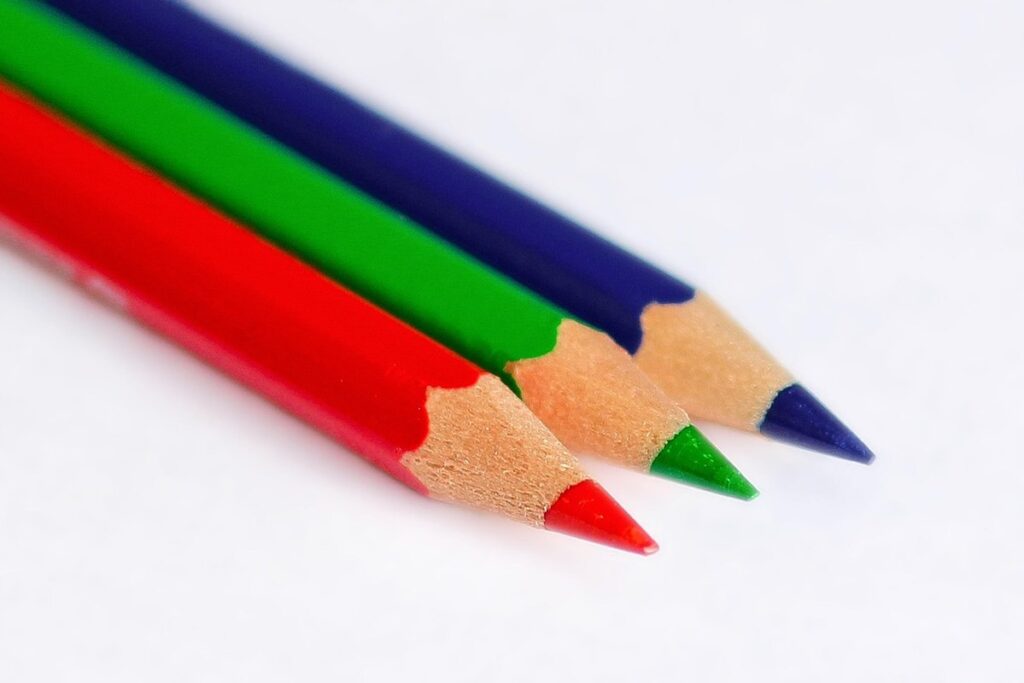
When exploring different drawing media, you’ll find a range of tools and materials to choose from. Pencils are a popular choice for beginners due to their versatility and ease of use. Graphite pencils offer a range of hardness levels, allowing for varying line weights and tonal values. Colored pencils add an extra layer of depth and color, but can be more challenging to master.
Charcoal is another drawing medium that offers expressive, gestural lines. It’s ideal for capturing quick sketches or loose studies. Vine charcoal is soft and fragile, while compressed charcoal is denser and more durable. Ink is a great option for those who prefer a more precise line. Dip pens, markers, and calligraphy tools all offer unique characteristics and can be used to achieve varying effects.
Digital drawing software has also become increasingly popular among beginners. Programs like Adobe Draw or Autodesk Sketchbook offer a range of brushes, pencils, and erasers that mimic traditional media. They’re ideal for those who want to experiment with different styles and techniques without the mess of physical materials.
Essential Tools and Equipment
Now that you’ve learned some basic drawing skills, it’s time to focus on the essential tools and equipment every beginner needs to get started and improve their technique. Let’s take a look at what you’ll need to bring your art to life.
Choosing the Right Pencils and Erasers
When selecting graphite pencils and erasers, it’s essential to understand the different types available. Graphite pencils come in a range of hardness levels, indicated by letters (HB being the most common). Harder pencils like 2B, 4B, and 6B produce darker lines but may not be as forgiving for beginners.
For erasers, you’ll typically find kneaded, white, or pink options. Kneaded erasers can be molded into different shapes to fit small areas, while white erasers are better suited for correcting larger mistakes. Pink erasers are gentle on paper and suitable for most corrections.
When choosing the right tools as a beginner, consider investing in a variety pack of graphite pencils that includes at least HB and 2B options. This will allow you to experiment with different line weights and techniques without breaking the bank. A good quality kneaded eraser is also essential for correcting mistakes.
It’s worth noting that some pencils may come with built-in sharpeners, but these are often less effective than a dedicated sharpener. For a beginner, it’s better to invest in a separate sharpener that can produce sharp points consistently.
Setting Up a Drawing Space
Proper lighting is essential for a drawing space. Ensure the room has natural light, and consider placing your workspace near a window to take advantage of soft, diffused light. Avoid direct sunlight, which can cause harsh shadows and glare on your paper. If you’re working at night or in a low-light environment, invest in a good quality desk lamp to provide focused illumination.
Ergonomics is also crucial for comfort and productivity. Position your drawing chair and table to allow comfortable reaching and movement between them. Keep frequently used materials within easy access to avoid straining your back or neck. Consider investing in a document holder or a tray to keep reference materials at eye level, reducing the need to constantly look up or down.
Organization is key to maintaining a clutter-free workspace and staying focused on your drawing. Designate specific areas for different tools and supplies, such as pencils, erasers, and paper. Use storage bins or baskets to keep materials contained and easily accessible. Keep frequently used items within reach, and store less essential items out of the way but still accessible when needed.
Basic Strokes and Techniques
Let’s start with the fundamental building blocks of drawing: basic strokes, lines, and shapes. Mastering these essential techniques will lay a solid foundation for your artistic journey ahead.
Mastering Lines and Shapes
Mastering lines and shapes is a fundamental aspect of drawing. A good understanding of various line styles and shapes will form the foundation for more complex techniques. There are four main types of lines: straight, curved, diagonal, and zigzag. Straight lines can be used to define edges or create sharp contrasts between light and dark areas. Curved lines are useful for capturing smooth, flowing forms like those found in natural objects.
Shapes are built from basic forms such as the circle, square, triangle, and rectangle. The ellipse is a more complex shape that is essential for drawing realistic proportions. One exercise to improve line work is to draw different types of lines without looking at your hand. This will help develop muscle memory and increase accuracy. To recognize shapes, try drawing simple objects like spheres or cylinders using only basic forms.
When drawing from observation, focus on breaking down complex forms into simpler shapes. For example, a tree can be seen as a combination of cylinders, cones, and lines. Practice drawing ellipses to improve your ability to capture realistic proportions.
Values and Shading
Values play a crucial role in drawing as they establish the depth and dimension of an image. The value scale ranges from pure black to pure white, with various shades in between. Hatching involves creating parallel lines that follow the contours of a subject, while cross-hatching creates a more textured look by layering hatching lines at different angles.
Stippling is another technique used to achieve varying values through small dots. The density and spacing of these dots determine the resulting value. Atmospheric perspective is also essential for conveying depth in drawings. It involves using lighter colors for objects in the background and darker, cooler colors for those in the foreground.
To create convincing shading, consider the following techniques: start with a general overall shape, then build layers of hatching or cross-hatching to add texture and depth. Pay attention to contrast – juxtaposing light and dark values creates visual interest. When working with stippling, use a range of dot sizes to achieve subtle variations in value.
A good starting point is to practice basic hatching strokes on a simple still-life setup. Once you become more comfortable with these techniques, experiment with more complex subjects and atmospheric perspective.
Understanding Proportion and Measurement
When drawing a subject, proportion is crucial to capture its likeness accurately. Mastering proportion and measurement skills will help you create more realistic and balanced compositions in your artwork.
The Golden Ratio and Proportions
The Golden Ratio and Proportions are fundamental principles of art composition. This concept is based on a mathematical ratio discovered by ancient Greeks, approximately 1:1.618. This proportion is often referred to as the “Golden Ratio” or Phi. It can be applied to various aspects of drawing, including shapes, lines, and even facial features.
To understand how to apply this principle, consider the following example: imagine a rectangular shape. Divide it in half both horizontally and vertically. Then, measure the shorter side and use that measurement as the base for dividing the longer side into segments. The result should be a series of proportions close to 1:1.618. This can help create balanced compositions and harmonious shapes.
Using measuring tools such as rulers and compasses is essential when applying these principles. Measure carefully, taking note of proportions rather than just making educated guesses. Practice drawing rectangles with different dimensions and apply the Golden Ratio to each one. Observe how it affects the overall balance and harmony of your drawings.
Measuring and Dividing Space
When drawing from life or observation, it’s essential to accurately measure and divide space on your paper. This ensures that your subject is proportionate and correctly represented. One effective technique for achieving this is by using grids. Start by lightly sketching a grid on your paper with evenly spaced lines. Then, superimpose the same grid pattern onto your subject. By aligning the grid lines with the edges of objects in your drawing, you can ensure that your proportions are accurate.
Another way to measure and divide space is by applying the principles of proportion. The golden ratio (approximately 1:1.618) is a commonly used standard for proportion, but it’s not always necessary or practical to use this specific ratio. Instead, focus on dividing your drawing into thirds both horizontally and vertically, creating nine equal sections. This will give you a sense of balance and harmony in your composition.
When applying these techniques to various subjects, remember that grids are particularly useful for drawing buildings or architecture, while proportions are more suitable for figurative work. Practice using both methods with simple exercises like drawing household objects or basic still-life setups.
Advanced Techniques and Concepts
Now that you’ve got a solid foundation, let’s take your drawing skills to the next level by exploring more complex techniques and concepts. These advanced methods will help you master the subtleties of form and expression.
Perspective and Vanishing Points
Perspective drawing is a fundamental concept in creating realistic and convincing scenes. You’ll encounter three main types of perspective: one-point, two-point, and three-point perspective. One-point perspective is used for depicting roads, hallways, or other linear features that recede into the distance. The vanishing point, where parallel lines appear to converge, lies on the horizon line. Two-point perspective is ideal for drawing buildings, boxes, or objects with rectangular shapes. Here, two vanishing points are established on either side of the object.
In three-point perspective, you’ll use three vanishing points: one on each axis (left-right and front-back) and a third at an angle. This type creates a more realistic sense of depth and dimensionality. Convergence is a crucial aspect of perspective drawing. As lines recede into the distance, they appear to converge towards their respective vanishing point. Atmospheric perspective plays a significant role in creating depth and distance in your drawings. Objects in the background will typically appear lighter and less detailed than those in the foreground due to the effects of atmospheric conditions like air and moisture.
When drawing with perspective, it’s essential to establish clear vanishing points and understand how lines converge towards them. Practice drawing simple exercises like roads or buildings using one-point, two-point, and three-point perspectives to develop your skills.
Texture and Pattern
To create texture and pattern in your drawings, you’ll want to explore different techniques. Hatching is one of the most basic methods, where you create a series of closely spaced parallel lines to suggest depth and detail. Stippling involves creating patterns with small dots, which can produce a range of textures from smooth to rough. Cross-hatching builds on hatching by layering lines at different angles, resulting in rich, three-dimensional effects.
Geometric patterns involve repeating shapes like triangles, squares, or circles. You can create them using straight edges and measuring tools for precision. Organic patterns, on the other hand, emerge from loose, expressive strokes that mimic natural forms. These might include swirling curves or branching lines inspired by foliage.
When practicing texture and pattern, start with simple exercises like filling a rectangle with hatching lines of varying densities or creating a stippled image using just a few colors. For geometric patterns, try drawing repeating shapes in isolation before applying them to more complex compositions.
Putting it All Together: Practice Exercises
Now that you’ve learned the fundamentals of drawing, it’s time to put them into practice. This section will guide you through a series of exercises to help solidify your new skills.
Simple Still-Life Drawings
Start by gathering a few household objects to create a simple still-life composition. This could be a vase, a book, and a small box. Experiment with different arrangements until you find one that appeals to you.
To practice basic strokes and shapes, try drawing the edges of each object using smooth, flowing lines. Focus on capturing the overall form and proportions of each piece rather than getting caught up in details like textures or patterns. You can use a range of pencils from soft to hard to achieve varying line weights.
Next, work on adding values and shading to your still-life drawing. Use gentle hatching motions with a softer pencil to create smooth transitions between light and dark areas. Consider using the side of the pencil for broad strokes and the tip for finer details.
Experiment with different materials like charcoal or ink to add depth and interest to your drawings. Try layering thin washes of color or building up thick textures to create more complex, three-dimensional effects.
Drawing from Observation
When drawing from observation, it’s essential to study the subject’s structure, texture, and patterns. Begin by observing the overall shape of the object or still life setup. Note how forms relate to one another in space, taking into account their size, proportion, and placement. Look for interesting textures, such as smooth, rough, or patterned surfaces.
Study the way light interacts with these textures, creating areas of highlight and shadow. Consider the overall value structure – the arrangement of light and dark values that gives depth and volume to your drawing. Observe how patterns repeat or vary across the subject’s surface.
To practice drawing from observation, start by choosing a simple still life setup or a single object. Set up a timer for 10-15 minutes and focus on observing and recording what you see without judgment. Don’t worry about rendering every detail – instead, concentrate on capturing the overall essence of the subject. When you feel your attention waning, take a short break before returning to observe again.
Use simple shapes and lines to block in the major forms of the object, then gradually add more details as you continue to study its structure and texture. By observing and drawing from life, you’ll develop a deeper understanding of how to render three-dimensional form on paper.
Tips for Continuous Improvement
As you continue to practice drawing basics, it’s essential to focus on areas that need improvement. This section offers practical tips to help refine your skills and stay motivated along the way.
Setting Goals and Challenges
Set aside time each week to review your progress and celebrate small victories. Observe how your skills have improved over time by regularly comparing your current work with pieces from a few weeks ago. Identify areas where you’re struggling and focus on those specifically.
To stay motivated, set achievable goals for yourself. Break down larger objectives into smaller, manageable tasks, such as dedicating 30 minutes each day to drawing or practicing a specific technique for an hour three times a week. Make sure these goals are challenging yet realistic – pushing yourself too hard can lead to frustration and burnout.
When obstacles arise, like struggling with proportions or getting stuck on a piece, take a break and come back to it later. Sometimes stepping away from a problem gives you fresh eyes and a new perspective. If you’re consistently hitting roadblocks, consider finding a drawing buddy or mentor for support and guidance.
Resources and Inspiration
As you continue to develop your drawing skills, it’s essential to stay inspired and informed about the latest techniques and trends in art and design. Reading books on drawing basics can provide valuable insights and exercises to help you improve. Some recommended titles for beginners include “The New Drawing on the Right Side of the Brain” by Betty Edwards and “Drawing from Observation” by James McMullan.
Online tutorials are also a great resource, offering step-by-step instructions and demonstrations of various techniques. Websites like Skillshare, Proko, and Drawabox provide high-quality lessons and critiques to help you refine your skills. Joining online communities dedicated to drawing can connect you with fellow artists, providing opportunities for feedback and motivation. Some popular communities include DeviantArt and ArtStation.
Staying up-to-date with the latest techniques is crucial for continuous improvement. Follow art blogs, social media accounts, and influencers who share their processes and tips on drawing and illustration. Attend workshops or classes in your local area to learn from experienced artists and get hands-on practice. By combining these resources with regular practice and a willingness to experiment, you can stay inspired and continue to grow as an artist.
Frequently Asked Questions
Can I Start Drawing with Digital Tools?
Yes. Many artists begin their journey with digital tools and transition to traditional media later on. However, it’s essential to understand the basics of drawing principles first, as they apply universally across mediums.
How Do I Know if My Drawing Space is Ergonomically Set Up?
Consider your posture while drawing: are you comfortable? Is your chair at a suitable height? Are your arms at 90-degree angles when holding your pencil or stylus? Make adjustments to ensure comfort and avoid fatigue.
What If I Get Stuck on a Particular Technique, Like Hatching or Cross-Hatching?
Don’t be discouraged! Practice is key. Break down the technique into smaller components, focusing on one aspect at a time. Use simple exercises to build your skills gradually. For instance, start by hatching straight lines and then progress to curved ones.
How Can I Apply Perspective Principles to Draw Realistic Scenes with Depth?
To apply perspective principles effectively, divide your scene into sections using vanishing points. Measure the proportions of each section carefully, ensuring that they align with your reference image or real-world observation. This will help you achieve a more realistic and engaging depth in your drawings.
What if I’m Struggling to See Shapes and Forms in My Subjects?
Practice observing shapes and forms in various subjects, starting with simple still-life compositions. Pay attention to how light interacts with texture and pattern. As you become more comfortable, apply this skill to more complex subjects, gradually increasing the difficulty level of your drawings.