
Drawing the human body can be a daunting task, especially when you’re trying to capture its intricacies with accuracy. One of the most fundamental aspects of drawing is understanding how the body’s proportions and skeletal structure work together to create a realistic form. When it comes to mastering figure drawing skills, knowledge of facial features and the underlying bone structure is crucial for capturing subtlety and nuance in your artwork. But what if you could draw with confidence, knowing exactly where to place each muscle, tendon, and ligament? In this expert guide, we’ll cover everything from basic proportions to advanced techniques for realism, helping you improve your skills and take your figure drawing to the next level by the time you finish reading.
Understanding the Basics
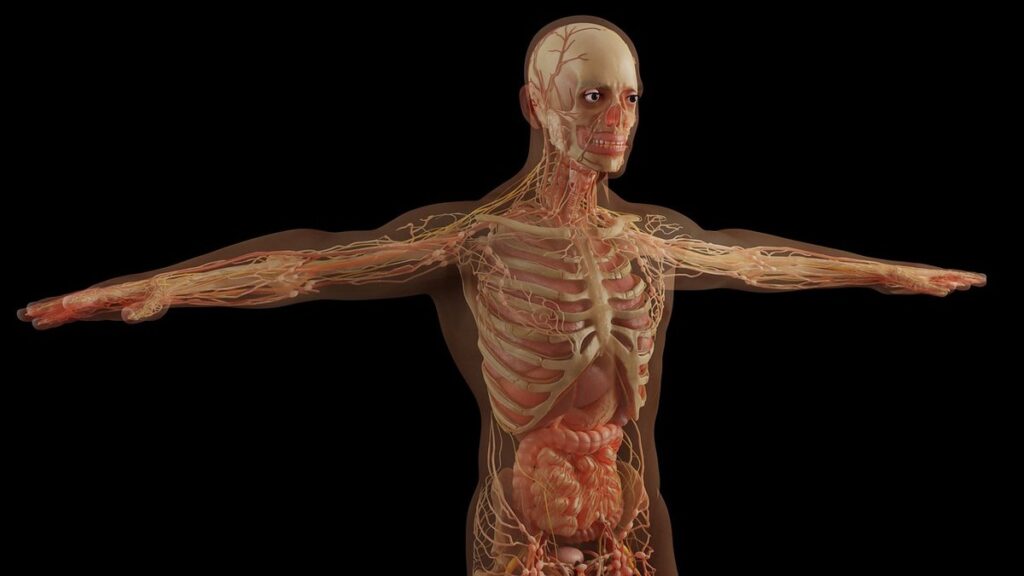
To get started, let’s break down the fundamental components of human anatomy that you’ll need to understand and draw accurately. This includes the skeletal system, muscle groups, and proportions.
The Importance of Proportions
Understanding proportions is crucial when drawing human body anatomy. A single misstep in proportion can make a figure appear distorted or unrealistic. When proportions are off, it’s often not just one aspect of the body that’s affected – it can cascade through the entire drawing, throwing off balance and harmony.
Inaccurate proportions can make even the most skillfully drawn features look awkward or unconvincing. For example, if a figure’s arm is too long compared to their body, it can throw off the entire pose and create an unnatural sense of movement. Similarly, if a head or torso is disproportionately large or small, it can disrupt the overall balance of the drawing.
To develop your understanding of proportions, practice measuring and comparing different parts of the body on both male and female figures. This will help you become more aware of the subtle variations in proportion that exist between individuals and better equipped to capture these nuances in your drawings.
Familiarizing Yourself with Skeletal Structure
The skeletal system is comprised of 206 bones, which work together to provide support, protection, and facilitate movement. To begin understanding human body anatomy through drawing, it’s essential to familiarize yourself with the different types of bones and their functions.
Start by learning about the axial skeleton, which includes the skull, spine, ribs, and sternum. These bones form the central axis of the body and provide support for the rest of the skeletal system. Next, explore the appendicular skeleton, which comprises the upper and lower limbs, as well as the shoulder and pelvic girdles.
When studying the skeletal structure, pay attention to how the bones articulate with each other. For example, the ball-and-socket joint in the hip allows for a wide range of motion, while the pivot joint in the neck enables rotation. Understanding these joints will help you accurately depict the way the skeleton moves and functions.
To apply this knowledge in your drawing practice, try sketching the skeletal system from different angles. Start with simple exercises like drawing the skull or the spine, and gradually move on to more complex structures like the arms and legs. By developing a solid understanding of the skeletal system, you’ll be better equipped to create realistic and anatomically correct drawings.
Drawing the Head and Neck
Drawing a convincing head and neck is all about understanding their proportions and capturing the subtle nuances of facial structure. Let’s break down the essential elements to get you started on this critical part of the human body.
The Facial Features
The eyes are typically positioned about one-quarter of the way down from the top of the head, with the outer corner slightly higher than the inner corner. The nose follows directly below, usually centered between the eyes and slightly tilted upwards at the tip. When drawing the mouth, consider its placement in relation to the jawline – it’s often positioned just above or level with the bottom edge of the lower jaw.
The distance between the eyes is roughly equal to one eye-width apart, while the nose is about half that measurement from the center. The curve of the upper lip is generally smooth and rounded, whereas the lower lip tends to be more angular.
To achieve accurate proportions, try drawing a vertical line from the top of each ear to the chin – this can help you gauge the placement of key facial features relative to the jawline. When observing a model or reference image, pay attention to how these measurements vary between different face shapes and expressions.
Capturing the Expression
Capturing the subtleties of human expression requires a deep understanding of facial anatomy. The muscles involved in facial expressions are often overlooked, yet they play a crucial role in conveying emotions. To accurately depict a person’s expression, you must identify and analyze the key muscle groups responsible for movement.
The zygomaticus major, orbicularis oculi, and corrugator supercilii are primary muscles controlling facial expressions. The zygomaticus major, located on either side of the mouth, is responsible for smiling, while the orbicularis oculi surrounds the eye, enabling blinking and squeezing shut. The corrugator supercilii, situated between the eyebrows, furrows the brow, indicating concern or concentration.
When drawing a person’s expression, focus on these key muscles and how they interact with one another. Consider the following when capturing facial anatomy: the curves of the nose and mouth, the depth of eye sockets, and the tension in neck and shoulder muscles that can affect facial alignment. Observe how different emotions alter muscle engagement – for example, a raised eyebrow is often accompanied by a furrowed brow. By studying and accurately depicting these nuances, you’ll be able to create more realistic and emotionally resonant portraits.
The Torso and Abdomen
Now that you’ve mastered drawing the head, it’s time to focus on the torso and abdomen. In this critical area of human anatomy, precise proportions are key to a lifelike figure.
Understanding the Chest and Ribcage
The chest and ribcage are two interconnected structures that provide a foundation for the rest of the torso. To accurately draw these areas, it’s essential to understand their individual components. The ribcage is composed of 24 ribs, which are curved bones that attach to the spine in the back and the sternum in the front. Twelve pairs of ribs make up this cage-like structure, with each pair consisting of a true rib and a false rib. The true ribs are attached directly to the vertebrae, while the false ribs connect indirectly.
When drawing the chest and ribcage, focus on capturing their relationship with the spine. Observe how the ribs curve outward from the spine to form the cage-like structure. Pay attention to the space between each rib, as this will help you achieve a more accurate representation of the torso’s shape. You can use simple guidelines or contour lines to help capture these subtle forms. Remember that the chest and ribcage are not fixed structures; they move with the body, so consider drawing them in different positions to practice capturing their flexibility.
Drawing Accurate Arm Placement
When drawing the arms on the torso, it’s essential to consider both muscle mass and bone structure. The scapula, or shoulder blade, forms the base of the arm placement, sitting atop the ribcage. Observe how the scapula curves outward slightly at its bottom edge, creating a subtle indentation where it meets the thoracic vertebrae.
The bony landmarks of the upper arm – the humerus – extend from the glenohumeral joint in the shoulder to the elbow. Notice how the humerus is roughly aligned with the long axis of the spine, particularly when viewed from the side. This alignment helps create a sense of natural pose and weight distribution.
To achieve accurate arm placement, focus on capturing these skeletal relationships. Imagine drawing an invisible line connecting the center of the glenohumeral joint to the midpoint of the elbow crease. This line should roughly align with the spine’s long axis. As you block in your arm placement, use gentle curves and smooth transitions to suggest muscle mass and movement.
By paying attention to these underlying bone structures, you’ll be able to draw more convincing and anatomically correct arm placements on your subjects.
The Upper Limbs
Let’s focus on mastering the intricate details of the upper limbs, including the shoulders, arms, and hands, which require a keen eye for proportion and accuracy. Understanding their anatomy is crucial to creating realistic drawings of the human body.
Skeletal Structure of the Arms
The shoulder girdle forms the foundation of the upper limb’s skeletal structure. It consists of two scapulae (shoulder blades) that sit atop the ribcage, each connected to the spine by strong muscles and ligaments. The scapulae have a distinctive shape, with a curved upper border and a flat lower border. When drawing, pay attention to this curvature: the upper border should be more rounded than the lower one.
The humerus (upper arm bone) extends from the shoulder joint, connecting the scapula to the elbow. It’s slightly angled, which affects the overall posture of the arm. The radius and ulna, two forearm bones, encircle the humerus at the elbow joint. These bones are connected by a complex system of ligaments and muscles.
When drawing the arms from life or reference images, note how the scapulae fit snugly against the ribcage. Observe how the humerus bends slightly as it connects to the elbow. Understanding this skeletal structure will help you accurately place your drawings’ arm bones and create more realistic proportions.
Understanding Muscle Groups
The triceps and biceps are two of the most prominent muscle groups in the upper arm. The triceps, which consists of three muscles (long head, lateral head, and medial head), extend the elbow joint and straighten the arm. Conversely, the biceps brachii flexes the elbow and supinates the forearm. Understanding how these major muscle groups interact is essential for accurately depicting anatomical poses.
To draw the arms with confidence, it’s crucial to consider the secondary functions of adjacent muscles. For instance, when drawing a bent elbow, you should also think about the role of the brachialis muscle in flexing the arm and stabilizing the elbow joint. Similarly, the triceps are responsible for extending the arm but also assist in rotating the forearm.
When studying anatomy, it’s helpful to observe how different muscles work together. For example, when drawing a pose with the arm lifted overhead, consider how the supraspinatus muscle assists the deltoids in stabilizing the shoulder joint and positioning the upper arm bone (humerus). This understanding will enable you to create more realistic drawings of the human form by accurately depicting complex anatomical relationships between muscles.
The Lower Limbs
The lower limbs are a crucial part of human anatomy, consisting of the legs and feet that work together to support our entire body in motion. Let’s examine their structure and proportions.
Skeletal Structure of the Legs
The hip joint is a ball-and-socket joint that connects the femur (thigh bone) to the pelvis. It’s essential to understand its structure when drawing the lower limbs, as it affects the overall proportions and placement of the legs. The femur is the longest bone in the body, extending from the hip joint to the knee. The tibia and fibula make up the lower leg bones, with the tibia being the weight-bearing bone.
The knee joint connects the femur to the tibia, allowing for flexion and extension of the leg. The patella (kneecap) sits at the front of the knee joint, providing a smooth surface for movement. When drawing the legs, focus on capturing the relationship between these bones and joints. Pay attention to the angles and proportions of each limb, especially in relation to the hip and knee joints.
To accurately draw the skeletal structure of the legs, consider the following key features:
- The femur is slightly thicker at the top than at the bottom
- The tibia is wider at the lower end (near the ankle) than at the upper end (near the knee)
- The patella sits in a slight depression on the front of the shinbone
Understanding Muscle Groups
The quadriceps muscles on the front of the thigh work together to straighten the knee and extend the leg. The hamstrings, located at the back of the thigh, flex the knee and bring the heel towards the buttocks. These two muscle groups have a direct relationship with each other: when the quadriceps contract, the hamstrings relax, and vice versa.
The gluteus maximus muscles in the buttocks also play a crucial role in extending the hip joint and rotating the leg outward. The adductor muscles on the inner thigh work to bring the legs together, while the abductors help move them apart. Understanding these relationships is essential for accurately depicting the lower limbs in your drawings.
When drawing the legs, it’s not just about placing the major muscle groups in the right positions. Consider how they interact with each other and how their contractions would affect the overall pose of the figure. For example, if a person is standing on one leg, which muscles are responsible for stabilizing that leg? How do those muscles relate to the ones in the other leg?
To better visualize these relationships, try drawing the legs from different angles or with varying levels of tension in the muscles. This will help you develop a deeper understanding of how the major muscle groups in the lower limbs function and interact with each other.
Advanced Techniques for Realism
To take your drawings to the next level, we’ll explore advanced techniques that capture the subtleties of human anatomy, from delicate muscles to intricate bone structures.
Capturing Texture and Skin Tone
When rendering realistic human body anatomy drawings, capturing texture and skin tone is crucial for creating a lifelike appearance. Start by studying the way different textures interact on the body – for instance, how the skin folds over joints or forms creases when muscles flex. Note that some areas, like the palms and soles, have distinctively thick skin with more pronounced ridging.
To accurately depict skin tone, pay attention to subtle variations in color across the body. The face is often lighter than the rest of the torso, with a gradual transition zone between the two. Consider the effects of sunlight on skin – areas that receive direct sun exposure tend to darken while those shaded by clothing or other features remain paler.
When illustrating different skin tones, avoid relying solely on a uniform base color. Instead, break down each area into its component parts: the undertones (warm or cool), the dominant hue, and any secondary colors present due to factors like freckles or scars. Use reference images to study how different skin tones interplay with clothing, hair, and other environmental factors in your drawing.
Mastering Gesture Drawing
Gesture drawing is a fundamental technique for capturing the essence of human body anatomy. When applied to drawings, it allows artists to quickly and accurately convey the pose and movement of the subject. In gesture drawing, you focus on sketching the overall shape and flow of the figure, rather than getting bogged down in details.
To master gesture drawing, start by practicing quick poses of 10-30 seconds each. Set a timer and rapidly sketch the entire figure, paying attention to the contours of the body and the placement of major joints. This will help you develop your observational skills and learn to capture the essence of movement.
A key aspect of effective gesture drawing is capturing the “action line,” which is the imaginary line that runs through the center of the body and indicates its direction of motion. Pay attention to where this action line intersects with major muscles, bones, and joints, as these will be crucial in conveying the sense of movement and energy.
By incorporating gesture drawing into your practice routine, you’ll find that your drawings become more dynamic and expressive, and your ability to capture human body anatomy is greatly enhanced.
Putting It All Together: Practice Exercises
Now that you’ve learned the basics of human body anatomy through drawing, it’s time to put your skills into practice with some exercises designed to reinforce your new knowledge. These practical drills will help you apply what you’ve learned.
Simple Figure Drawing Exercises
When engaging in simple figure drawing exercises, it’s essential to focus on capturing the overall proportions and structure of the body. Start by sketching a basic outline of the figure, paying attention to the placement of major joints such as the shoulders, hips, and knees. Next, practice drawing simple gestures of the limbs, focusing on their length and relationship to one another.
For example, you can try drawing a figure in a relaxed pose, with the arms hanging freely by the sides. Then, draw the same figure with the arms raised above the head or bent at the elbows. This exercise helps develop your understanding of the body’s proportions and how they change depending on movement.
Another simple exercise is to sketch a series of basic poses from observation – not from memory. Observe how the weight of the body shifts between different positions, affecting the alignment of joints and limbs. Practice drawing these observations accurately to improve your ability to capture realistic anatomy in your drawings.
Advanced Composition Techniques
When creating engaging and realistic human body anatomy drawings, composition plays a crucial role. Advanced composition techniques can elevate your artwork from a straightforward depiction of the subject to a visually appealing piece of art. One key aspect is balance: consider where you place the focal point in your drawing. A well-placed focal point draws the viewer’s eye, while an awkward placement can detract from the overall impact.
Another technique is negative space management. Leaving sufficient space around the figure allows the viewer to breathe and focus on specific areas of the anatomy. Conversely, over-crowding with details or excessive texture can overwhelm the composition.
Consider the rule of thirds: dividing your paper into thirds both horizontally and vertically, placing important elements along those lines creates a more engaging drawing. For example, positioning the shoulders at the top third line creates a sense of weightlessness, while placing them at the bottom third emphasizes their importance in the anatomy.
Use visual flow to guide the viewer’s eye through the drawing. This can be achieved by using leading lines or shapes that draw attention to specific areas of interest.
Frequently Asked Questions
How Can I Apply Proportions to Draw Realistic Portraits?
Yes, when drawing portraits, focus on establishing correct proportions from the start. Measure and draw the overall length of the head, then use these measurements to place facial features accurately. This attention to detail will help you create a realistic and balanced portrait.
What if My Drawing Skills Are Limited – Can I Still Master Human Body Anatomy?
Yes, anyone can learn human body anatomy through drawing with dedication and practice. Start by practicing simple exercises like gesture drawing or figure drawing from life. As your skills improve, gradually move on to more complex subjects, focusing on understanding the underlying structure.
How Do I Choose Between Drawing from Life or Using References for More Realistic Drawings?
Both methods have their advantages. Drawing from life allows you to observe and understand the subtleties of human anatomy directly. Using references, especially photographs with clear anatomical markers, can also help in achieving accuracy. A combination of both approaches often yields the most realistic drawings.
How Can I Practice Gesture Drawing Without Feeling Overwhelmed?
Begin by setting a timer for short intervals (10-15 minutes) and focusing on capturing the overall pose or movement of your subject during that time. As you become more comfortable, gradually increase the duration of your practice sessions. Don’t worry about detailed accuracy at this stage; focus on quickly conveying the essence of the gesture.
Can I Use Digital Tools for Drawing Human Body Anatomy?
Yes, digital tools can be an excellent choice for practicing human body anatomy drawing. Many software and apps offer adjustable guidelines and overlays to help with proportions and skeletal structure. They also allow for easy erasure and correction, which can be particularly useful in learning stages. However, remember that mastering anatomical accuracy often requires practice with traditional media as well.